Mary
About Me
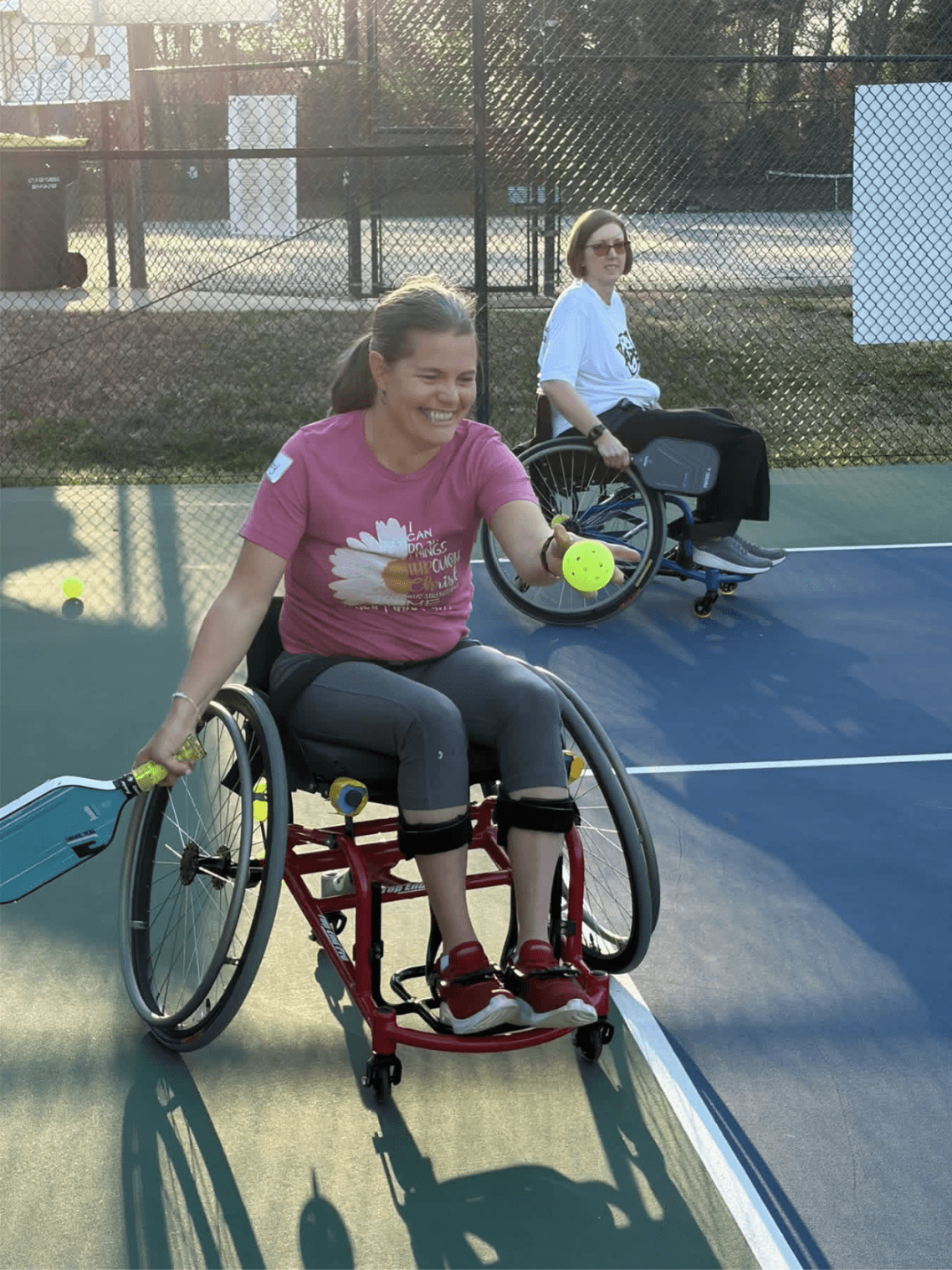
Mary maintains a very positive and optimistic outlook on life, embracing a “go with the flow” mentality. She enjoys spending time outdoors and holds a personal philosophy of trying everything at least once. By focusing on what she can do rather than her limitations, she continues to find hobbies that bring her joy, such as playing pickleball. Through adapting activities to fit her needs, Mary consistently finds creative ways to stay involved and maintain a vibrant, active lifestyle.
Diagnostic Journey
Mary’s diagnostic journey began during a high school physical when she was unable to walk on her heels, prompting a referral to a Muscular Dystrophy clinic. Over the next two decades, she received several potential diagnoses, including Charcot-Marie-Tooth disease, Hereditary Spastic Paraparesis, and Spinal Cerebellar Ataxia. It wasn't until 2019, when she enrolled in the Rare Genomics Project through the Broad Institute that she finally found answers. In 2021—24 years after her initial symptoms were noticed—Mary received her official diagnosis of ARSACS, and genetic testing also confirmed that both of her parents are carriers.
Message to the Community
Mary’s message to the ARSACS community is one of pure empowerment. She views ARSACS not as a disease, but as a condition—one that requires adaptation but does not dictate her identity. She firmly believes that with the right mindset and necessary accommodations, individuals with ARSACS can do anything they set their minds to. She encourages others to live life to the fullest, pursue their passions, and never let the condition hold them back from what they want to achieve.
Message to Those Unfamiliar with ARSACS
For those unfamiliar with ARSACS, Mary emphasizes that the condition is only one aspect of a person’s life and should never be seen as something that completely restricts them. While it absolutely requires adaptation, it does not diminish a person’s ability to pursue meaningful, fulfilling experiences. She wants people to understand that with proper support and a positive attitude, individuals living with ARSACS can continue to follow their passions and lead incredibly active, engaging lives.
Hopes for the Future of ARSACS
Looking ahead, Mary hopes to raise vital awareness about ARSACS through advocacy. By sharing her personal story, she wants to help others with rare conditions feel less alone in their journeys. She also emphasizes that ARSACS affects everyone differently, highlighting the ongoing need for personalized care within the medical community. Ultimately, Mary stresses her hope for a future where proper accommodations and modifications are widely accessible, making full participation in society possible for absolutely everyone.